Saturday, April 16, 2011
Week 15: Gaming for Greatness
Looking back on elementary school, problems can oft look comical. For example, my biggest foe was neither personal nor academic, but a logical journey: namely, the final level of Zoombinis. I struggled for what seemed like weeks (it was probably a few hours) with my eyes glued to the orange Macintosh, my palms sweaty with the pressure of the situation.
Like I said, life was tough back then.
But I know for a fact that I was not alone in this problem -- one of my good friends and I had a serious bonding experience judging the attractiveness of the Mary-Ann or blonde ponytailed creature. In class this week we discussed how educational games like Zoombinis is becoming ever more popular as a learning tool for students young and old as education is becoming more and more technologically driven. Oregon Trail, MathBlaster and Where In the World Is Carmen SanDiego? keep their appeal because, for all intents and purposes, they're secretly educational. I may have been learning to solve logic problems, but I definitely didn't know it at the time.
Knowledge Adventure is a site solely dedicated to providing free educational online games for kids, ranging from ages toddler to 12 with a wide range of subject matter. I don't know about you, but I'll be playing the animal game.
Sara Solano has rollerskates for feet.
Thursday, April 14, 2011
Week 14: Bunny Slippers in First Period
I was a driven student with absolutely no desire to take the required health class in high school. Sure, I went through the motions and took PE, but...health? I know how STDs work and since that was pretty much all they desired to hammer home, I was pretty confident that I could function in society without this class. While I normally wouldn't turn down an easy A, I certainly regretted not being able to take another AP class instead to boost my GPA. So I did what any other obnoxiously competitive kid would do -- I took health online.
This week in class, we explored how not only are classes offered for high schools and colleges, but entire degrees are available via strictly online classes. Colleges like University of Phoenix and public school programs like Florida Virtual School allow students to connect to the classroom without having to leave the comfort of their rooms -- which is excellent for returning students working full-time jobs or who cannot otherwise attend classes regularly.
Onlineschools.org compiles statistics, rankings and reports for online schools for K-12 and colleges in helpful articles and info graphics.
Sara Solano is still competitive, but in more refined, subtle ways. Like tripping you.
This week in class, we explored how not only are classes offered for high schools and colleges, but entire degrees are available via strictly online classes. Colleges like University of Phoenix and public school programs like Florida Virtual School allow students to connect to the classroom without having to leave the comfort of their rooms -- which is excellent for returning students working full-time jobs or who cannot otherwise attend classes regularly.
Onlineschools.org compiles statistics, rankings and reports for online schools for K-12 and colleges in helpful articles and info graphics.
Sara Solano is still competitive, but in more refined, subtle ways. Like tripping you.
Wednesday, April 6, 2011
Week 13: America's Online...and So Is Your Boss
With all of this technology inundating us on a daily basis, it would be foolish not to think it would heavily influence the work force. More and more, paper applications are being disregarded for what can be saved as a PDF. Resumes, cover letters and digital applications are all the rage across the employment plane. Not only this, but employers are looking more and more toward personal websites to be a resource for finding information about applicants.
This week in class we discussed establishing a professional presence on the Internet via Google Sites. For a project, we include a home page, resume, personal information and work samples. My first project for my web design class was to hand-code a personal website (ssolano.com, if you're interested) using XHTML and CSS. While it was an infinitely tedious endeavor, having a link to put on a resume has been an excellent addition to make me stand apart from other applicants. Especially in the journalism field in which the movement is toward online media, showing competence professionally online is a great way to reassure employers that you are a valuable asset to their company.
This article from MarketWatch goes into how to not only be competent online, but how to make sure that you appear professional in social media and other things that can be Googled by employers.
Sara Solano can design you a website. Seriously, pay me.
Saturday, March 26, 2011
Week 12: Head in the Clouds
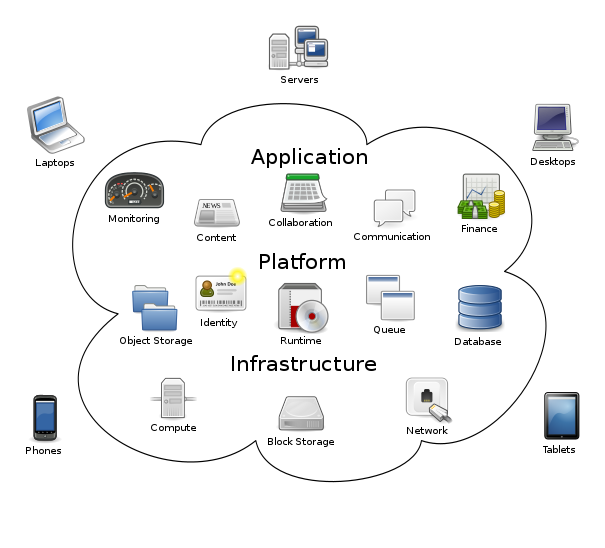
With collaboration becoming one of the more important elements of usability on the web, cloud computing has rapidly become a popular way of working on projects and compilations with multiple people across friend groups, departments and companies.
In class, we experimented with using Google Docs and explored the uses of Delicious, a website dedicated to hosting bookmarks by tags that would otherwise be lost in the muck of the standard browser Favorites section. For journalists, Google Docs are undeniably one of the more useful developments for collaboration as they can be formatted to either mimic Microsoft Word or similar functions of PowerPoint but still allow multiple users to add to the document.
An excerpt from the test document I sent in for class further articulated how cloud computing adds to the media industry:
"Cloud computing resources like Google Documents are invaluable in the media field. The collaborative function of it hosted on such a universal server like Google makes it easily accessible for multiple editors and reporters to have access to the same information. This makes the editing process infinitely easier and would make it more likely to prevent spelling or fact errors. Shared calendars and spreadsheets also make it easier to plan events and make sure that news would be covered in a timely manner with shared responsibility. In addition, shared documents could also be an easy way to compile an application packet for a job. For example, I applied to work as a summer intern for The Village Voice newspaper in New York, and their application required compiling work samples, a resume and cover letter within a shared Google Doc."
Here is a list of the top 15 social bookmarking sites according to Ebizmba.com. In particular, I'm a fan of Digg and Reddit, in which users submit news and interesting articles for others to comment on and share. Both sites have served as a forum of knowledge for the web-savvy younger generation, and those who want information quickly would definitely enjoy the frequently updated site for their browser homepage.
Sara Solano thought Delicious was a fansite for Iron Chef: America.
Sunday, March 20, 2011
Week 10: Media Never Sleeps
Spring Break.
I spent most of it in Miami soaking up the sun and an excess of blood alcohol content. But between South Beach and XBox, I spent much of my days coursing about the Internet in the way that I can imagine a lab mouse does when it's let loose in that maze used in cartoon science experiments.
I found my cheese. Oh, I found it alright. Found it in resident Hollywood nut Charlie Sheen -- the darling of the social media blitz. As if garnering one million followers on Twitter in 24 hours wasn't enough, the next of kin to the Mighty Ducks legacy made a call via his Twitter to college students and bored cubicle workers everywhere to be his next #TigerBloodIntern.
Being the healthy, irony-loving American that I am, I instantly applied. As did 75,000 other people from across the globe. According to Internships.com, a surprisingly legitimate resource to be hosting something so seemingly bizarre, the intern would work directly with Sheen's personal staff to manage his social media accounts in a paid, 8-week trip to Sober Valley. Sure enough, Round 2 had me submit resume information and by Round 3, the applicant pool was narrowed down to the top 250...and I was somehow still in the running.
Round 3 called for applicants to submit a two-minute YouTube video answering one of three questions concerning social media in politics, international affairs or corporations. I was also rather caught off-guard by the demands that the videos be taken seriously and with a professional attitude. However, I am competitive by nature and the chance for adventure was remarkably enticing (as was wearing a suit on camera). Hence, I enlisted the help of a friend of mine who's well-versed in the ins and outs of telecommunication production and made my submission.
Here I amrambling pontificating talking about CNN's use of social media:
Here's hoping to a Round 4?
Sara Solano genuinely had no idea what else to blog about to have enough for this second set of entries and hopes this is funny enough to suffice.
I spent most of it in Miami soaking up the sun and an excess of blood alcohol content. But between South Beach and XBox, I spent much of my days coursing about the Internet in the way that I can imagine a lab mouse does when it's let loose in that maze used in cartoon science experiments.
I found my cheese. Oh, I found it alright. Found it in resident Hollywood nut Charlie Sheen -- the darling of the social media blitz. As if garnering one million followers on Twitter in 24 hours wasn't enough, the next of kin to the Mighty Ducks legacy made a call via his Twitter to college students and bored cubicle workers everywhere to be his next #TigerBloodIntern.
Being the healthy, irony-loving American that I am, I instantly applied. As did 75,000 other people from across the globe. According to Internships.com, a surprisingly legitimate resource to be hosting something so seemingly bizarre, the intern would work directly with Sheen's personal staff to manage his social media accounts in a paid, 8-week trip to Sober Valley. Sure enough, Round 2 had me submit resume information and by Round 3, the applicant pool was narrowed down to the top 250...and I was somehow still in the running.
Round 3 called for applicants to submit a two-minute YouTube video answering one of three questions concerning social media in politics, international affairs or corporations. I was also rather caught off-guard by the demands that the videos be taken seriously and with a professional attitude. However, I am competitive by nature and the chance for adventure was remarkably enticing (as was wearing a suit on camera). Hence, I enlisted the help of a friend of mine who's well-versed in the ins and outs of telecommunication production and made my submission.
Here I am
Here's hoping to a Round 4?
Sara Solano genuinely had no idea what else to blog about to have enough for this second set of entries and hopes this is funny enough to suffice.
Wednesday, March 16, 2011
Week 11: Hipsters for Handouts
This week's examples of open source software included Open Office, a free comparable version of Microsoft Office programs and SourceForge, a database for open source projects circulating throughout the web. From a journalistic perspective, some of the most useful online apparatuses stem from open source software. For example, the popular browser Firefox is open source and is used by about one-third of Internet surfers, and is especially popular among the younger, web-savvy crowd. FTP programs such as FireFTP are only available for Firefox and, more often than not, the browser displays XHTML and CSS more accurately than popular default browsers like Internet Explorer in Windows and Safari in the Mac OS.
Osalt is similar to SourceForge in that it provides information about open source alternatives to corporate programs such as iTunes and Movie Maker.
Sara Solano is trying to breed actual firefoxes.
Thursday, March 10, 2011
Bonus Blog: Nomcast Ep. 1
Podcasting has become a popular means of getting information and discussion in an era in which people are connected to sound via earbuds and Apple products. Ranging from news coverage to every day topics such as Kevin Smith's comedic Smodcast, Bill Simmons' sports/pop culture-themed B.S. Report and local improv troupe ArACkA Spontaneous Comedy's ArACkast (you're welcome, Rich). Sound is an easy way for people to download what you have to say via their mp3 players and listen on the go -- whether on the bus, in the car or at the gym, it's a quick and easy way to have portable news without wondering where to recycle your newspaper.
http://saraeme2040.podbean.com/
Sara Solano really likes pancakes.
Tuesday, March 1, 2011
Week 8: Picture Books For Adults
Digital storytelling is what cardboard baby books were for us as children -- bright, stimulating and impossible to put down. However, these visuals are not merely to pass the time, but now serve a relevant and important function in today's media industry.
In class, we discussed the programs used for making digital storytelling compilations and how they can be used. On a similar vein, my Communication on the Internet class discussed how audio and visual components greatly enhance a news story. What truly can make a story "sing" as my professor says is what brings the text to life -- stirring photos and emotionally charged interviews and other sound bytes. Keeping this in mind, the Internet has played a major role in expanding newspapers' repertoire to Soundslides (which overlay audio on photos), slideshows and video.
This link from the University of Houston has a great guide on how to utilize digital storytelling techniques in education.
Here's a sample Animoto clip from my recent Orlando trip:
Create your own video slideshow at animoto.com.
Sara Solano is the Mother Goose of our generation.
In class, we discussed the programs used for making digital storytelling compilations and how they can be used. On a similar vein, my Communication on the Internet class discussed how audio and visual components greatly enhance a news story. What truly can make a story "sing" as my professor says is what brings the text to life -- stirring photos and emotionally charged interviews and other sound bytes. Keeping this in mind, the Internet has played a major role in expanding newspapers' repertoire to Soundslides (which overlay audio on photos), slideshows and video.
This link from the University of Houston has a great guide on how to utilize digital storytelling techniques in education.
Here's a sample Animoto clip from my recent Orlando trip:
Create your own video slideshow at animoto.com.
Sara Solano is the Mother Goose of our generation.
Sunday, February 13, 2011
Week 6: Seeing Is Believing
This week in class we discussed the importance of visual literacy, an abstract term used to describe our ability to take visual cues in place of reading actual words. For instance, if you were to travel to a foreign country outside the realm of Romance languages in which you could sound out the men's room, you could default to finding the stick figure not wearing a triangular dress. The male and female figures that indicate restrooms act as substitutes for words and have become completely mainstream in the worldwide thought process. In order to sharpen our skills to be visually literate, we had to complete an exercise in Photoshop.
One of the most important tools in the journalism industry right now is Photoshop. While the ethics of using it has come under much scrutiny, its usefulness for optimizing photos for the Web and for design has played a huge part in the media industry's success in the 21st century. In every journalism class I've taken thus far in the University of Florida's J-School, there has been at least a few mentions of Photoshop, if not a project or hands-on application of it.
However, like I said, the ethics of using Photoshop in a journalistic environment is a major conflict within the community. Where is the line drawn between enhancing reality and warping it? Lightening an image to increase the quality or to give the illusion that the photographer did a better job than he or she did? What about editing out undesirable background clutter? It's all up for debate. In this video for the Dove Real Beauty campaign, it is shown how Photoshop is often used in advertisements and magazines to edit celebrities and models.
Sara Solano realizes she could've been giving herself green eyes all this time. Stupid color contacts.
Wednesday, February 9, 2011
Week 5: People Still Do That?
I thought people stopped making webs after the FCAT.
However, mind-mapping tools have expanded from the strictly pencil-and-paper to online tools like the ones we covered this week in class. While we stuck to using Webspiration, many others like bubbl.us and Gliffy have gained popularity. Using the tool to explain various online tools such as social networking, blogging and video hosting to further the field of journalism can be found in the previous post.
This same week, bubbl.us was mentioned in my Communication on the Internet (MMC 3260) class. While many are so interested in jumping straight into design, the mind-mapping tools can make it easier when trying to lay out a complicated website. If there's one thing I've so far taken away from that class, it's the importance of an easily navigable site for the best interest of the visitors. Without taking the proper steps to outline, a website could wind up being convoluted and awkward, which would instantly turn away potential customers, readers, etc.
Another website of the sort is Mind Meister which does many of the same functions as the others, but in a more advanced level. Users can also collaborate to make real-time sessions.
Sara Solano is the Magellan of the Internet.
Thursday, February 3, 2011
Tuesday, February 1, 2011
Bonus Blog: Disney Explains It All
I chose this video from YouTube because of its really creative way of explaining what a copyright and fair use is. Instead of merely lecturing, professor Eric Faden of Bucknell University opted to splice Disney animated films together to explain the concepts. It also goes into the detail of using copyrighted materials for parody, critical commentary or its commercial impact. I also found it interesting that he chose to use Disney animations in particular to prove that even a company so "intimidating" in its ownership of its content, fair use would dictate that it still could be used as educational material.
Sara Solano wishes she was Belle.
Sunday, January 30, 2011
Week 3: The New Way to Web
"Uh, I dunno. Check Wikipedia."
The same conversation happens with different situations at least twice a day for the average curious citizen of the Web. The permeation of tools like social networking websites and wikis have culminated into something known as "Web 2.0." According to the article we read, the definition of this new platform is debatable, but can be is "read-write," as opposed to the read-only that gained popularity in the 1990s. Instead of the Internet being something people merely dial onto and read, it is now something that is always on, always alert and always editable. This week's class covered an exploration of Web 2.0 and its effects on education (as well as us setting up our blogs to be used throughout the course). The fact that this isn't even the first class I've had to blog in (it's actually the third) in addition to maintaining two personal blogs with some consistency.
The journalism industry has been thriving under the Web 2.0 platform, having been plateauing within the print industry but booming on the Internet. Newspapers have moved online, blogs such as Mashable and TechCrunch have been regarded as legitimate news outlets for niche markets and social networking websites have done their fair share. For example, Twitter has positively cornered the market on what's known as "citizen journalism." This movement allows non-professionals to be able to document events that can be covered by the media from everything like civil unrest to the World Cup. Wikis that can be edited by anyone with access to do so(such as our class wiki) make collaborative efforts more effective, and the overall productivity of the media industry has improved tenfold.
I decided to go back in time and change my original link to something more current: the revolution in Egypt has been so heavily impacted by Twitter, I figured it needed to be addressed. The civil unrest in the country has been exacerbated by the government's attempt to block the social networking site since it was being used by civilians to rally their efforts. Access to information like this is how Web 2.0 is influencing the media, reporting and current events across the globe.
Sara Solano was the one who changed Justin Beiber's Wiki page to say he looked like squirrel in a blender.
Thursday, January 20, 2011
Week 2: An Intro to the Obvious
Macs are the standard. Macs are the best. Macs don't get viruses. So why on Earth don't I own one?
I'm poor as dirt.
While I don't personally own one, I'll toss my Dell Studio 15 to the dust in favor of borrowing a friend's Macbook Pro. Because of this, I was already fairly well-versed in the basic technicalities of the Mac OS. Week 2 of the class was geared toward becoming familiar with a Mac apparatus and being able to perform basic tasks such as creating file folders and identifying tools on the OS. The lessons in the rudimentary functions such as file creation and labeling were quite simple, but for someone unfamiliar with the system, I can see how they would be very helpful.
The University of Florida College of Journalism and Communications has just enacted the change to its curriculum that includes a requirement that all new students admitted for Summer B 2011 and after own multiple new pieces of necessary industry technology...including a Mac laptop. Having come into college in the fall of 2009, it's still a sore spot that my folks weren't required to spend the extra cash for a graduation present. However, the Mac has undeniably become the industry standard with knowledge Mac-friendly programs such as TextWrangler for HTML code and Final Cut Pro for video editing becoming essential skills for any well-rounded, competitive journalist.
This article lays out the details for the college freshman looking to make the choice between PC or Mac. While there are definite benefits to both, there's definitely a specific system out there that will fit a person's individual needs.
Sara Solano is an avid blogger and is not above panhandling.
Subscribe to:
Comments (Atom)